

Milan & Venice: A Renaissance Reawakening
Northern Italy is experiencing a renewed fascination with the Renaissance, the period that irrevocably shaped Western art and thought. Milan and Venice are at the forefront of this shift, driven by new technologies enhancing the visitor experience.
Italy remains a focal point for art and history lovers, blending its past and present. The application of Artificial Intelligence to the museum experience is capturing attention, moving beyond simply seeing masterpieces to interacting with them in new ways.
A Fora Travel report on Northern Italy's Renaissance sites notes increasing demand for immersive cultural experiences. Museums are responding with AI-powered audio guides and augmented reality reconstructions to bring the Renaissance to life for a 21st-century audience, adding layers of understanding and engagement.

Milan's Pinacoteca & AI Guides
Milan’s Pinacoteca di Brera is a principal art gallery with Italian Renaissance and Baroque masterpieces by Raphael, Caravaggio, and Mantegna, covering artistic development from the 14th to the 18th centuries. Housed in a 17th-century palazzo, the gallery's vast collection can be challenging to navigate and fully understand.
Current tours at the Pinacoteca include self-guided options with maps and group tours led by human guides. These can be informative but often lack personalization and can be crowded. AI is being introduced to address these limitations, with several companies developing apps for the Pinacoteca, though adoption is still in progress.
Emerging AI guides offer object recognition, allowing visitors to point smartphone cameras at paintings for instant information on artists, historical context, and techniques. Some apps provide personalized tours based on user interests, and audio descriptions enhance accessibility for visually impaired visitors. Early versions show remarkably accurate object recognition, though art historical analysis depth varies.
These AI tools grapple with interpretation by explaining philosophical underpinnings and Renaissance intellectual context, not just identifying paintings like Raphael’s The School of Athens. The best apps offer nuanced commentary and encourage visitors to form their own interpretations.
- Pinacoteca di Brera Highlights:
- Raphael: The School of Athens
- Caravaggio: Supper at Emmaus
- Mantegna: The Lamentation over the Dead Christ
- Bellini: Pietà
AI Features in Northern Italy Museums
- Object Recognition - AI identifies artworks and provides instant information, enhancing visitor understanding of the piece.
- Artist Information - Detailed biographical and contextual data about Renaissance artists is readily available through AI-powered systems.
- Custom Tours - Visitors can create personalized itineraries based on their interests, focusing on specific artists, themes, or periods.
- Multilingual Support - AI translates artwork descriptions and tour information into multiple languages, catering to international visitors.
- Audio Descriptions - AI-generated audio descriptions provide detailed narratives of artworks for visually impaired visitors, promoting accessibility.
- Image Magnification - AI allows visitors to zoom in on intricate details of paintings and frescoes, revealing hidden aspects of the artwork.
- Contextual Insights - AI provides historical and cultural context surrounding artworks, enriching the visitor’s understanding of the Renaissance period.
Venice: Doge's Palace & AR Storytelling
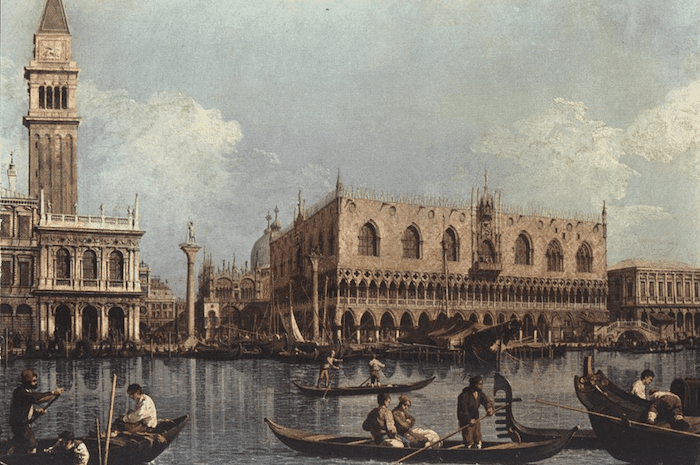
Venice’s Doge’s Palace, a Gothic architectural masterpiece, presents unique challenges and opportunities for AI integration. Its history is intertwined with the Venetian Republic's political and artistic life, spanning centuries of power and patronage. The palace's vastness can be overwhelming for visitors.
Traditional tours of the Doge’s Palace focus on political history and the Doges' stories, often overlooking artistic details and hidden narratives. The extensive artwork by Titian, Veronese, and Tintoretto makes full appreciation difficult in a single visit.
In Venice, AI emphasis is on augmented reality (AR) storytelling. Projects are underway to recreate historical events within the palace, allowing visitors to witness scenes from the Venetian Republic’s past, such as a virtual Doge’s election in the Council Chamber with period costumes and sound effects.
AR also reveals hidden details within artwork, overlaying paintings with information on symbolism or artistic techniques. This adds depth to the viewing experience, allowing visitors to see artwork in a new light. The technology is intriguing.
Beyond Identification: AI & Interpretation
Identifying a painting with an app is straightforward; the challenge is enabling AI to offer meaningful art historical interpretation. Algorithms can analyze brushstrokes, color palettes, and composition, but struggle with subjective art appreciation.
Ethical considerations arise regarding biases in AI interpretation algorithms. If an AI is trained on Western art, its interpretation of other cultures may be inaccurate. Museums must ensure AI-driven art history is accurate, unbiased, and culturally sensitive, and be transparent about algorithms and training data.
Accuracy is paramount, as AI can amplify misinformation in art history. Museums must vet AI guide information against scholarly consensus. AI is a tool, not a replacement for human expertise; art historians and curators remain vital in shaping art understanding.
AI risks presenting a simplified, potentially misleading version of art history rather than replacing art historians. This complex issue requires ongoing dialogue between museums, AI developers, and art experts.
Practicalities: Planning Your 2026 Trip
By 2026, AI-enhanced museum tours should be widely available in Milan and Venice, likely as smartphone apps or rentable headsets/tablets. Expect costs between 15 and 30 euros for premium tours.
Booking tickets in advance is recommended, especially during peak season, with many museums offering online systems and potential discounts. Be prepared for crowds at popular attractions like the Pinacoteca di Brera and Doge’s Palace. Visiting during shoulder seasons (spring or fall) offers a more relaxed experience.
Museums are working to ensure AI tours are available in multiple languages, with subtitles and audio descriptions. Check directly with museums for availability. Downloading necessary apps before your trip is advisable to avoid unreliable Wi-Fi.
Milan vs. Venice: A Tech Comparison
Milan leads in AI-powered museum tours, particularly at the Pinacoteca di Brera, focusing on detailed, personalized tours with object recognition and art historical analysis. Venice prioritizes immersive experiences through augmented reality storytelling at the Doge’s Palace.
Milan's approach offers an in-depth, educational experience with detailed artwork information, while Venice's AR recreations aim for a visually stunning and emotionally engaging experience that transports visitors back in time. Both have merits.
undefined you’re a serious art enthusiast, Milan is probably the better choice. If you’re looking for a more immersive and visually spectacular experience, Venice is the way to go.
AI-Enhanced Museum Tours: A Comparison - Milan vs. Venice (Projected 2026)
| City | AI Focus | Technology Maturity | Estimated Cost to Visitor | Language Support |
|---|---|---|---|---|
| Milan | Interpretation | Developing | Low | Moderate |
| Milan | Accessibility | Early Stage | Free | Limited |
| Venice | Immersion | Developing | Moderate | Moderate |
| Venice | Interpretation | Early Stage | Low | Limited |
| Venice | Accessibility | Developing | Low | Moderate |
| Milan | Immersion | Early Stage | Moderate | Limited |
| Venice | Interpretation | Early Stage | Free | Limited |
Illustrative comparison based on the article research brief. Verify current pricing, limits, and product details in the official docs before relying on it.
Beyond the Museums: AI & Renaissance Context
The impact of AI extends beyond the museum walls. Several companies are developing AI-powered walking tours that connect the art to the historical context of Milan and Venice. These tours use GPS technology to guide visitors through the cities, providing information about Renaissance-era buildings, churches, and landmarks. They often incorporate historical maps and images, bringing the past to life.
There are also apps that recreate Renaissance-era maps of Milan and Venice, allowing visitors to explore the cities as they would have appeared centuries ago. These apps can be particularly helpful for understanding the urban planning and architectural styles of the period. Virtual reconstructions of historical buildings, such as the original facade of the Duomo in Milan, are also becoming increasingly common.
The Italian Renaissance Document Site (irds-project.org) is a valuable resource for researchers and enthusiasts alike, offering access to a wealth of primary source materials. While not an AI-powered tool itself, it provides the raw data that can be used to train AI algorithms and enhance our understanding of the Renaissance. The site contains letters and other documents that reveal the daily lives and thoughts of Renaissance figures.
By combining these AI-powered tools with traditional historical research, visitors can gain a truly immersive and enriching experience of Renaissance Northern Italy. It’s a fascinating time to explore this region, and the possibilities for AI-enhanced tourism are only just beginning to be explored.

No comments yet. Be the first to share your thoughts!