

Italy in 2026: What's Different and How It Impacts Your Packing
Italy remains a perennial favorite for travelers, and 2026 promises to be no different. However, a few key developments are worth noting as you plan your trip. The high-speed rail network is continuing its expansion, with new lines planned to connect smaller cities and regions, making it easier to explore beyond the usual tourist hotspots. Several airports, including Venice Marco Polo and Rome Fiumicino, are undergoing renovations to increase capacity and improve passenger experience.
Popular destinations like Rome, Florence, and Venice will likely remain crowded, but we are seeing a growing interest in regions like Puglia, Basilicata, and Le Marche. These areas offer a more authentic Italian experience, with fewer tourists and lower prices. Travel advisories are generally stable, but it’s always wise to stay updated on any potential risks or concerns through your government’s travel website.
Perhaps the most significant shift is a growing emphasis on sustainable tourism. Italy is actively promoting responsible travel practices, encouraging visitors to support local businesses, reduce their environmental impact, and respect local culture. This means you might see increased fees for access to certain areas, or a greater focus on eco-friendly accommodations and tours. The core Italian experience – the food, the art, the history, the people – will remain wonderfully consistent, but being a mindful traveler is becoming increasingly important.
Despite these changes, the fundamental principles of packing for Italy haven’t shifted dramatically. Comfort and practicality are still key, but a little forethought about regional variations and seasonal weather will go a long way. Don't get bogged down in trying to predict the future; focus on preparing for the Italy you know and love, with a little flexibility for the unexpected.
Trento Italy Travel Guide: Best Things to Do & Tips#Travel #TravelTips #TravelGuide #ExoticHoliday #trentohttps://t.co/4giVTnTHkM
— Media Pro (@alampro777) April 10, 2026
Decoding Italy's Climate: A Region-by-Region Breakdown
Italy’s climate is remarkably diverse, influenced by its long shape and varied topography. It’s not simply "warm in the summer" – the experience differs dramatically depending on where you are. Northern Italy, including the Dolomites and Milan, experiences a continental climate with cold, snowy winters and warm, humid summers. In May, average temperatures in Milan hover around 17°C (63°F), rising to 25°C (77°F) in June. September sees a pleasant 21°C (70°F), while October cools to 14°C (57°F).
Tuscany, famed for its rolling hills, has a Mediterranean climate with warm, dry summers and mild, wet winters. Florence averages 22°C (72°F) in May, peaking at 28°C (82°F) in June. September remains comfortable at 24°C (75°F), while October brings cooler temperatures around 18°C (64°F). Siena and Pisa experience similar conditions, though Siena, being slightly inland, can have more pronounced temperature swings.
Rome and the Lazio region enjoy a classic Mediterranean climate with hot, dry summers and mild, wet winters. May sees average temperatures of 20°C (68°F), climbing to 27°C (81°F) in June. September is still warm at 24°C (75°F), but October brings a noticeable drop to 19°C (66°F). The Amalfi Coast and Campania experience similar conditions, but with higher humidity levels and slightly warmer temperatures, especially along the coast.
Sicily, the largest island in the Mediterranean, has a subtropical climate with hot, dry summers and mild, wet winters. Palermo averages 23°C (73°F) in May, reaching 29°C (84°F) in June. September remains warm at 26°C (79°F), while October is a pleasant 22°C (72°F). It’s important to remember that microclimates exist – coastal areas are generally milder than inland mountainous regions. Packing for the Dolomites in April requires significantly warmer layers than packing for Rome in April.
- Northern Italy (Dolomites, Milan): Continental climate, cold winters, warm summers.
- Tuscany (Florence, Siena, Pisa): Mediterranean climate, warm dry summers, mild wet winters.
- Rome/Lazio: Mediterranean climate, hot dry summers, mild wet winters.
- Amalfi Coast/Campania: Mediterranean climate, high humidity, warm temperatures.
- Sicily (Palermo): Subtropical climate, hot dry summers, mild wet winters.
Italy Regional Weather & Packing Considerations - 2026
| City | Month | Average High (°C) | Average Low (°C) | Average Rainfall (mm) | Packing Consideration |
|---|---|---|---|---|---|
| Florence (Tuscany) | January | 8 | 2 | 55 | Warm layers, waterproof jacket |
| Florence (Tuscany) | April | 17 | 7 | 50 | Light jacket, comfortable shoes |
| Florence (Tuscany) | July | 30 | 18 | 30 | Light clothing, sun protection |
| Florence (Tuscany) | October | 22 | 12 | 80 | Light layers, umbrella |
| Sorrento | January | 12 | 6 | 100 | Waterproof jacket, warm clothing |
| Sorrento | April | 18 | 10 | 60 | Light layers, comfortable walking shoes |
| Sorrento | July | 28 | 20 | 20 | Lightweight clothing, swimwear |
| Sorrento | October | 23 | 16 | 120 | Light jacket, umbrella |
| Milan (Northern Italy) | January | 4 | -1 | 65 | Heavy coat, hat, gloves |
| Milan (Northern Italy) | April | 15 | 6 | 60 | Light jacket, scarf |
| Milan (Northern Italy) | July | 28 | 17 | 80 | Light clothing, sun protection |
| Milan (Northern Italy) | October | 16 | 7 | 85 | Layers, waterproof jacket |
Illustrative comparison based on the article research brief. Verify current pricing, limits, and product details in the official docs before relying on it.
The Seasonal Traveler: Packing Lists for Spring, Summer, Autumn, and Winter
Spring (April-May) in Italy is a delightful time to visit, with blossoming flowers and pleasant temperatures. Pack layers – a light jacket, sweaters, long-sleeved shirts, and t-shirts. Comfortable, broken-in walking shoes are essential, as you’ll likely be doing a lot of exploring. A waterproof jacket or umbrella is a good idea, as spring showers are common. Don’t forget sunglasses, sunscreen, and a reusable water bottle.
Summer (June-August) is hot and sunny, particularly in the south. Lightweight, breathable clothing is key – cotton, linen, and moisture-wicking fabrics are your friends. Pack shorts, t-shirts, sundresses, and a wide-brimmed hat. Sunscreen with a high SPF is crucial, as is a good pair of sunglasses. Comfortable sandals or walking shoes are essential, but consider bringing a pair of nicer shoes for evenings out. Remember that many churches require shoulders and knees to be covered, so pack a light scarf or shawl.
Autumn (September-October) offers mild temperatures and beautiful foliage. Pack layers again – a light jacket, sweaters, long-sleeved shirts, and jeans. A waterproof jacket is a good idea, as autumn can be rainy. Comfortable walking shoes are still essential. Consider bringing a scarf and gloves for cooler evenings.
Winter (November-March) can be cold and snowy, especially in the north. Pack a warm coat, hat, gloves, and scarf. Waterproof boots are essential, especially if you plan on visiting mountainous regions. Layers are key – thermal underwear, sweaters, and a waterproof outer layer. Don’t forget a portable charger for your phone, as the cold can drain batteries quickly.
- Spring: Light jacket, sweaters, long-sleeved shirts, t-shirts, comfortable walking shoes, waterproof jacket, sunglasses, sunscreen, reusable water bottle.
- Summer: Lightweight clothing (cotton, linen), shorts, t-shirts, sundresses, hat, sunscreen, sunglasses, comfortable sandals/walking shoes, scarf/shawl.
- Autumn: Light jacket, sweaters, long-sleeved shirts, jeans, waterproof jacket, comfortable walking shoes, scarf, gloves.
- Winter: Warm coat, hat, gloves, scarf, waterproof boots, thermal underwear, sweaters, waterproof outer layer, portable charger.
Regional Variations: What to Pack for Specific Italian Experiences
Hiking the Cinque Terre requires sturdy hiking boots, moisture-wicking socks, and comfortable hiking clothes. A lightweight waterproof jacket is essential, as the weather can change quickly. A small backpack is useful for carrying water, snacks, and sunscreen. Don't forget a hat and sunglasses to protect yourself from the sun.
Attending an opera in Verona calls for more sophisticated attire. A smart dress or trousers and a shirt are appropriate. Comfortable shoes are still important, as you’ll likely be doing some walking. A light jacket or shawl may be needed, as theaters can be cool.
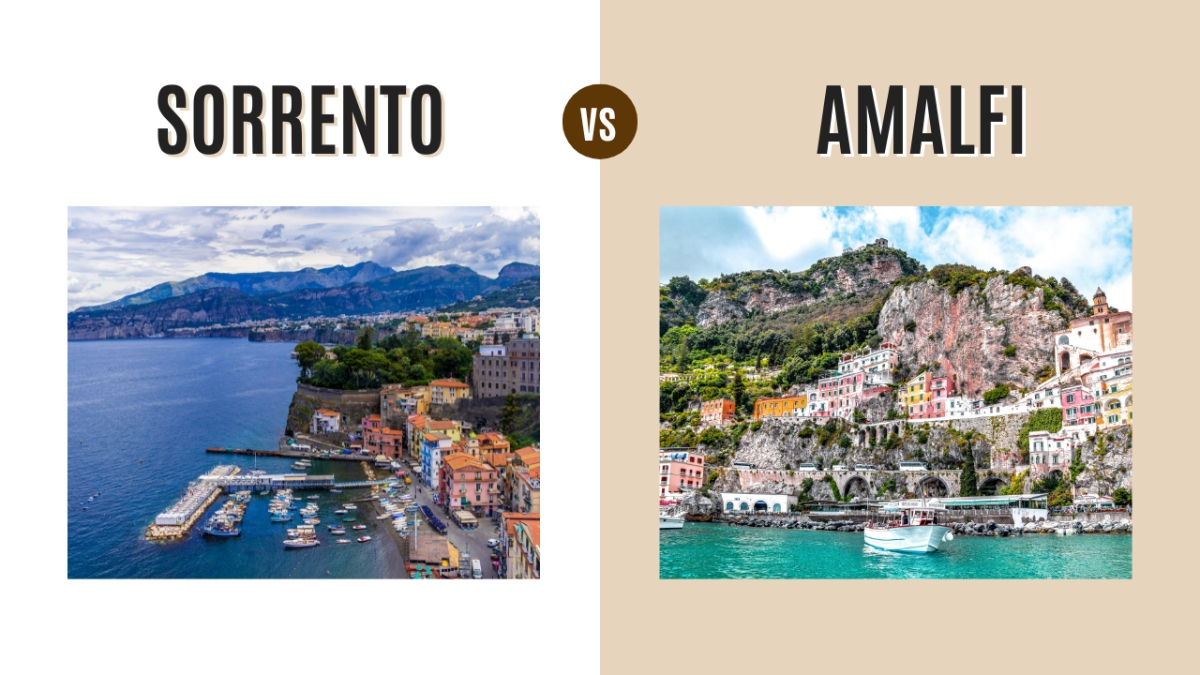
A luxury stay in Sorrento allows for a more relaxed dress code. Pack comfortable yet stylish clothing, such as linen trousers, sundresses, and sandals. A swimsuit is essential, as Sorrento is located on the coast. Don’t forget sunscreen, sunglasses, and a hat.
A ski trip in the Dolomites demands warm, waterproof clothing. Pack a ski jacket, ski pants, thermal underwear, a hat, gloves, and a scarf. Goggles and sunscreen are essential for protecting yourself from the sun and snow. Don’t forget warm socks and waterproof boots.
The 'Just in Case' Items: Medications, Documents, and Tech
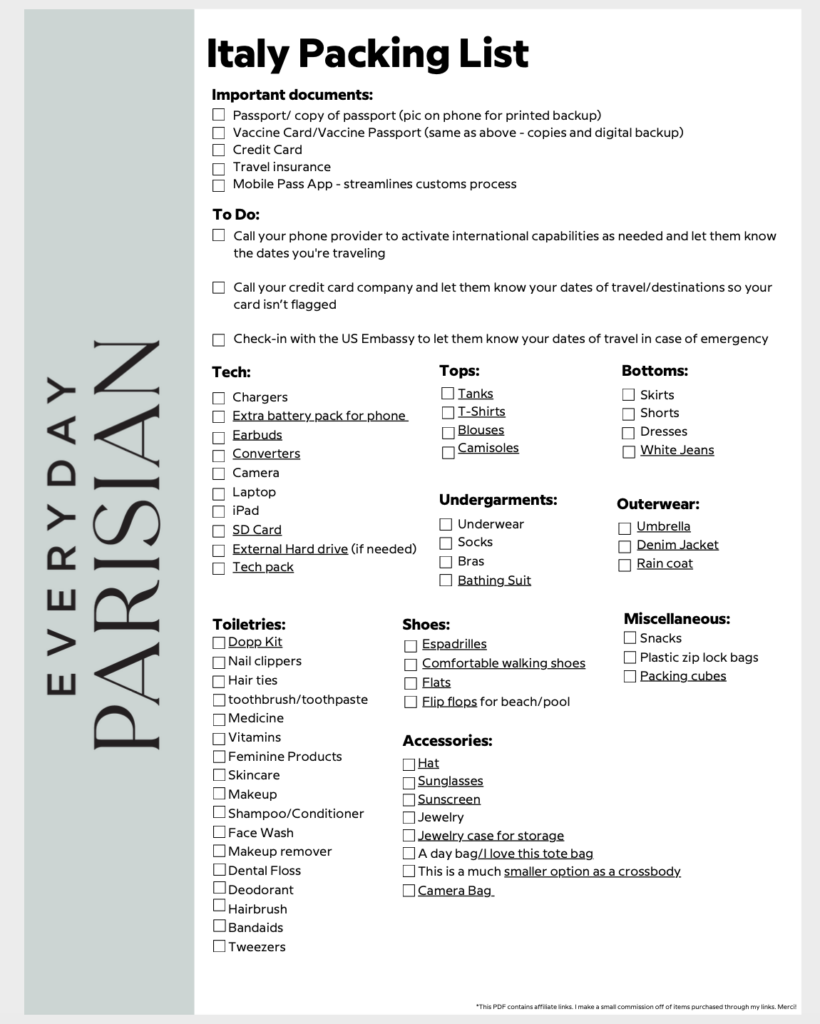
Always pack any essential medications you require, along with a copy of your prescription. It’s also wise to bring a basic first-aid kit with bandages, antiseptic wipes, pain relievers, and any personal medications. Keep copies of your passport, travel insurance information, and flight tickets separate from the originals. Consider scanning these documents and emailing them to yourself for easy access.
Pickpocketing can be a concern in crowded tourist areas. A money belt or RFID-blocking wallet can help protect your valuables. Be aware of your surroundings and avoid displaying expensive jewelry or electronics. Downloading offline maps and translation apps can be incredibly helpful, especially if you don’t speak Italian. Google Translate and Maps.me are good options.
Italy uses Type C and Type F electrical outlets, which have two or three round pins. If your devices use a different type of plug, you’ll need a universal adapter. A portable power bank is also a good idea for keeping your phone charged on the go.
- Medications: Essential medications + prescription.
- Documents: Passport copy, travel insurance info, flight tickets.
- Tech: Phone, charger, portable power bank, universal adapter.
Essential Document Copies
- Passport - A photocopy of your passport's photo page. Keep this separate from your actual passport.
- Driver's License - If you plan to rent a vehicle, a copy of your driver’s license is crucial. Remember to also carry an International Driving Permit if required.
- Travel Insurance Policy - A copy of your travel insurance details, including policy number and emergency contact information. Providers like Europ Assistance and Allianz Travel Insurance are popular choices.
- Flight/Train Tickets - Keep digital and physical copies of all your transportation confirmations (flights, trains with Trenitalia or Italo Treno).
- Emergency Contact Information - A list of emergency contacts (family, friends, embassy/consulate details) with phone numbers and addresses.
- Credit Card Information - A photocopy of the front and back of your credit cards (covering the CVV code after taking the photo). Store this securely and separately from your cards.
Packing Light: Tips and Tricks for Efficient Travel
Rolling your clothes instead of folding them can save space and reduce wrinkles. Packing cubes are a fantastic way to organize your luggage and compress your clothes. Choose versatile clothing items that can be mixed and matched to create different outfits. A neutral color palette is a good idea.
Consider doing laundry while you travel. Many hotels offer laundry service, or you can find a laundromat. Hand washing small items in your hotel sink is also an option. Travel-sized toiletries can save space and weight. Solid toiletries, such as shampoo bars and solid deodorant, are even more space-saving.
Resist the urge to pack "just in case’ items. If you’re not sure whether you’ll need something, leave it at home. You can always buy it in Italy if necessary. Remember, you"ll likely want to buy souvenirs, so leaving some extra space in your suitcase is a good idea.
What *Not* to Pack: Common Mistakes and Unnecessary Items
Sunscreen and toiletries are readily available in Italy, so you don’t need to pack large quantities. High heels are impractical for navigating cobblestone streets – opt for comfortable walking shoes instead. Bringing too many clothes is a common mistake – it’s better to do laundry than to overpack. Avoid overly flashy jewelry or clothing, which can attract unwanted attention.
Expensive electronics that aren't essential should be left at home. The risk of theft or damage is simply too high. Don’t pack items that you wouldn’t be devastated to lose. Remember, Italy is a stylish country, but comfort and practicality are more important than fashion.
- Unnecessary Items: Excessive toiletries, high heels, too many clothes, expensive electronics.
No comments yet. Be the first to share your thoughts!