

Italy’s Climate, Season by Season
Italy's climate varies significantly by region and season, making packing a nuanced task. Northern Italy has a continental climate with colder winters and hotter summers, while the south features a Mediterranean climate with mild, wet winters and hot, dry summers.
Spring (April-May) can bring warm days but frequent showers. Rome might see temperatures around 20°C (68°F), while the Dolomites could still have snow. Summer (June-August) is hot, particularly in the south, often exceeding 30°C (86°F). Autumn (September-October) offers pleasant temperatures and fewer crowds, though rainfall increases. Winter (November-March) is cold in the north with mountain snow, and mild in the south.
Temperatures can vary significantly, even within a single day. Coastal areas are generally milder than inland regions, and mountainous areas are considerably cooler. Checking the forecast before travel is advisable, but packing for a range of conditions is recommended.
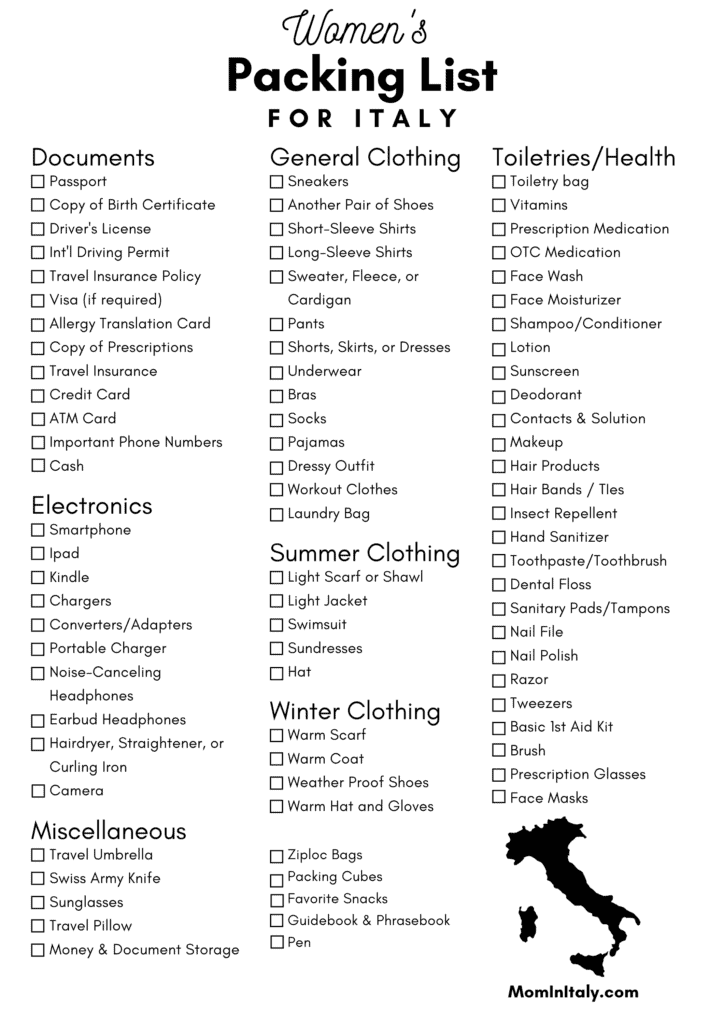
Core Clothing Principles for Italy
Several foundational clothing items are essential for any Italy trip. Layering is crucial for adapting to daily temperature changes. Comfortable, well-worn walking shoes are necessary for navigating cobblestone streets and uneven terrain.
Versatile pants or skirts suitable for various occasions are essential. Dark wash jeans, chinos, and comfortable walking trousers are suitable choices. A lightweight jacket or cardigan is useful for cooler evenings or air-conditioned spaces, even in summer. A scarf can serve as a functional accessory for warmth or sun protection.
Modest attire is required for visiting churches and religious sites, including the Vatican. Men should wear long pants, and women should cover their shoulders and knees. Pack accordingly, or be prepared to purchase a cover-up upon arrival.
- Comfortable, broken-in walking shoes
- Versatile pants or skirts
- Layering pieces (cardigans, light jackets)
- Scarf
- Modest clothing for religious sites
Spring (April-May): Layers are Your Friend
Spring weather in Italy can be unpredictable, with warm, sunny days often followed by cool evenings and occasional showers. Packing layers, including cardigans, light jackets, and a waterproof outer layer, is recommended for comfort.
Comfortable, supportive, and ideally waterproof footwear is recommended, as cobblestone streets can be slippery when wet. A light trench coat or a packable rain jacket and a small umbrella are practical additions. Temperatures typically range from 10°C (50°F) to 20°C (68°F), with potential fluctuations.
Weather can change dramatically within hours. Regional variations are significant; for example, Sicily will be warmer than the Dolomites. Packing for a range of conditions is advisable.
Summer (June-August): Beat the Heat
Summer in Italy is characterized by high temperatures. Lightweight, breathable fabrics like linen and cotton are ideal for staying cool. Pack t-shirts, shorts, skirts, and sundresses. Sun protection, including a wide-brimmed hat, sunglasses, and high-SPF sunscreen, is essential.
When visiting churches or religious sites, a lightweight scarf or shawl can be used for shoulder coverage. Quick-drying fabrics are practical for swimming or water activities. A small, quick-drying towel is also useful.
Moisture-wicking materials and wrinkle-resistant fabrics are beneficial for travel clothing. Some hotels and restaurants use air conditioning, so a light sweater or cardigan is advisable even in summer.
Autumn (September-October): A Sweet Spot
Autumn offers pleasant weather, fewer crowds, and the harvest season. Packing for autumn requires flexibility due to significant temperature variations. Layers are recommended, with slightly warmer options needed compared to summer.
A waterproof jacket or trench coat is recommended due to increased autumn rainfall. Comfortable shoes are essential for cobblestone streets. Pack a mix of short-sleeved and long-sleeved shirts, along with sweaters. Temperatures typically range from 15°C (59°F) to 25°C (77°F), with cooler evenings.
Autumn is suitable for wine tasting, so consider packing slightly dressier attire, such as a collared shirt or a simple dress. Many regions celebrate the grape harvest, contributing to a festive atmosphere.
Winter (November-March): Warmth and Style
Packing for winter in Italy requires warm clothing, including coats, sweaters, hats, gloves, and scarves. Waterproof boots are recommended for cobblestone streets. Thermal underwear can provide additional warmth.
While hotels typically have central heating, preparation for cold outdoor temperatures is necessary. Mountain visits require appropriate snow and ice gear. Northern temperatures can fall below freezing, while southern regions remain milder.
Warmth does not necessitate sacrificing style. A stylish wool coat and a scarf can provide warmth and maintain a fashionable appearance. Layering remains effective for managing temperature.
Winter Packing – Region vs. Activity
| Region | Activity | Clothing Recommendation | Footwear Recommendation | Additional Notes |
|---|---|---|---|---|
| Rome | Sightseeing | Pack light jacket, layers for fluctuating temperatures | Comfortable, broken-in walking shoes | Consider modest attire for visiting churches. |
| Florence | Sightseeing | Pack heavy coat, scarf, and gloves | Waterproof boots recommended, cobblestone streets can be slippery | Dressy outfit may be needed for evening events. |
| Venice | Sightseeing | Pack heavy coat, waterproof outer layer | Waterproof boots recommended, potential for flooding | Layers are crucial as temperatures can vary. |
| Dolomites | Hiking | Pack heavy coat, thermal base layers, waterproof and windproof outer layers | Waterproof hiking boots with good ankle support | Check weather conditions before heading out, conditions can change rapidly. |
| Rome | Fine Dining | Dressy outfit needed, consider a coat for travel | Comfortable dress shoes | Many restaurants have a smart casual dress code. |
| Florence | Relaxing | Pack light jacket, comfortable sweater | Comfortable walking shoes or slippers for your accommodation | Focus on comfortable, casual clothing. |
| Venice | Relaxing | Pack warm layers, including a sweater and scarf | Comfortable walking shoes, waterproof if possible | Be prepared for damp conditions. |
| Dolomites | Sightseeing | Pack heavy coat, warm hat, and gloves | Waterproof boots recommended, especially if snow is present | Dress in layers to adapt to changing temperatures. |
Illustrative comparison based on the article research brief. Verify current pricing, limits, and product details in the official docs before relying on it.
Don't Forget These Essentials
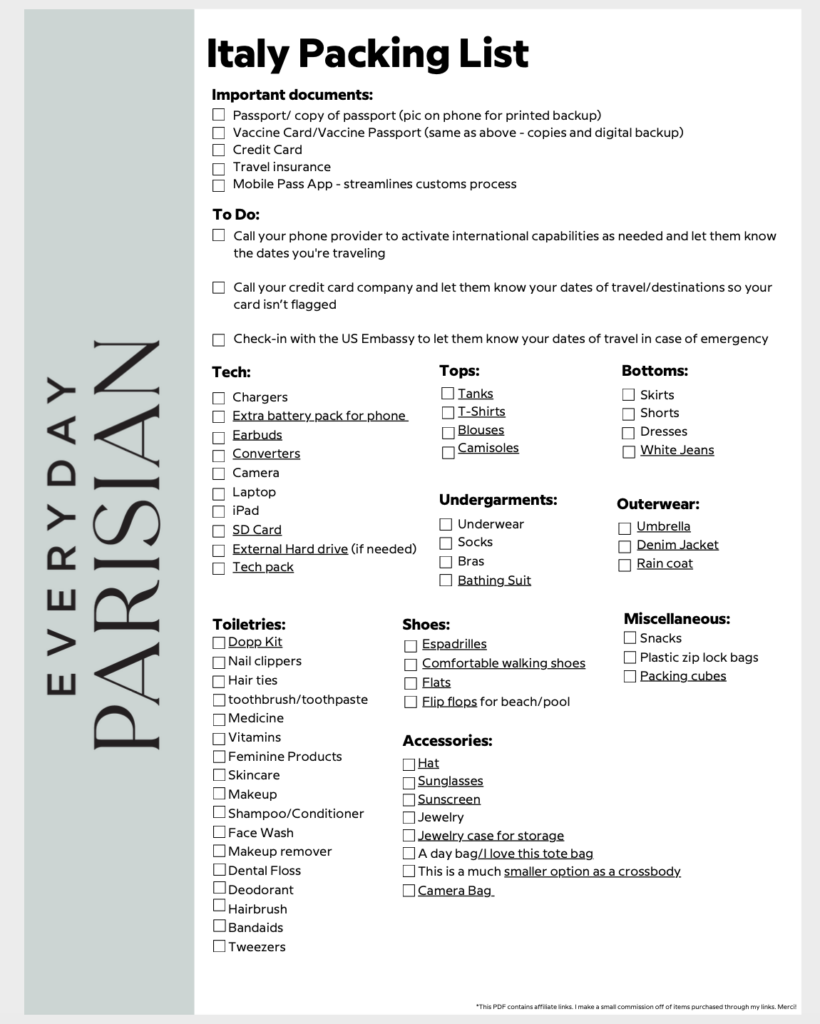
Essential non-clothing items include a universal adapter (Italy uses Type C and L plugs), a reusable water bottle for hydration and waste reduction, and a small first-aid kit with basic supplies.
Carry necessary medications with a prescription copy. Store a separate copy of your passport. Be aware of pickpockets in crowded tourist areas and avoid bringing valuables that are irreplaceable.
Travel insurance is recommended for protection against unexpected medical expenses, lost luggage, and trip cancellations. Policies covering emergency medical evacuation are advisable due to potential high costs.
What *Not* to Pack
Resist the urge to overpack. You really don’t need to bring your entire wardrobe. Focus on versatile pieces that can be mixed and matched. Leave the fancy jewelry and flashy clothing at home – they can attract unwanted attention. Italy is a stylish country, but subtlety is often appreciated.
Most toiletries are readily available in Italy, so you don’t need to pack a huge supply. You can easily purchase shampoo, conditioner, soap, and other essentials at local pharmacies or supermarkets. Save space in your luggage for souvenirs and local products.
Finally, don't pack anything you'd be devastated to lose. Travel always carries a small risk of lost or stolen items, so it's best to leave anything irreplaceable at home.
No comments yet. Be the first to share your thoughts!